

Table of Contents
- Why Plumbing Maintenance Matters More Than You Think
- How to Prevent Frozen Pipes in Winter
- Signs of a Plumbing Leak You Should Never Ignore
- How to Maintain Water Heater Efficiency
- Your Seasonal Plumbing Maintenance Checklist
- Smart Home Leak Detection Technology
- When to DIY vs. Call a Professional Plumber
- Conclusion
- Frequently Asked Questions
Last Updated: September 20, 2026
Why Plumbing Maintenance Matters More Than You Think
Plumbing maintenance is the routine inspection and care of your home’s water supply, drains, and fixtures to prevent failures before they happen. It matters because plumbing is the most common repair category in American homes: ConsumerAffairs home repair statistics found that 27.94% of homeowners reported a plumbing repair, outpacing air conditioning at 23.67% and refrigerators at 22.77%.
Plumbing repairs are the number one home repair category in the country. A 30-minute seasonal check beats a weekend of cleanup every time.
How to Prevent Frozen Pipes in Winter
The best way to prevent frozen pipes is to insulate every exposed pipe and keep a slow drip running through fixtures on exterior walls during hard freezes. Water expands as it freezes, and that expansion splits copper and plastic alike.
Start with these steps before the first cold snap:
- Insulate pipes in crawl spaces, garages, and along exterior walls.
- Disconnect garden hoses and shut off outdoor spigots.
- Keep cabinet doors open under sinks on exterior walls.
- Let one faucet drip overnight when temps drop below freezing.
- Keep your thermostat at 55°F or higher, even when away.
Signs of a Plumbing Leak You Should Never Ignore
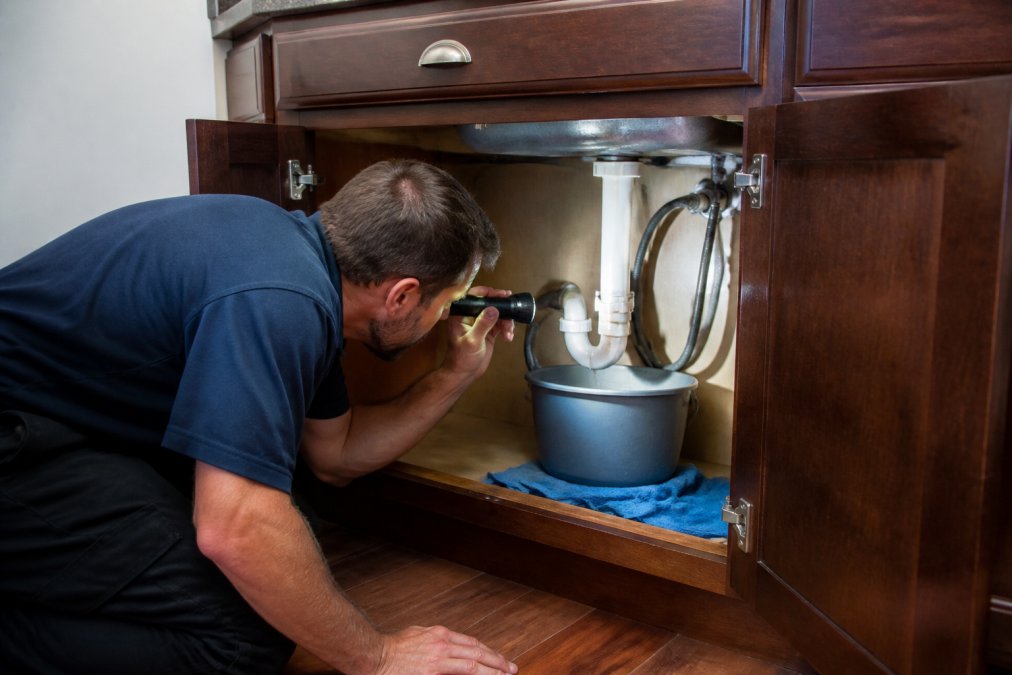
A plumbing leak rarely announces itself with a burst. It whispers first, through water spots, puddling, and a meter that spins when nothing is running. The trick is knowing which signal points to which system, because the fix for a supply-line leak is nothing like the fix for a drain leak or a slab leak.
Read the symptom, then trace the source
- Water spots on ceilings or walls, brown or yellow rings usually mean a supply line or drain above that room. A ring that grows after every shower points to a drain; a ring that grows constantly points to a pressurized supply line.
- Puddling under sinks, water heaters, or appliances, check the supply connections first, then the drain trap. Washing machine hoses are a common failure point because rubber degrades and bursts under constant pressure.
- A spike in your water bill with no change in habits, this is the single most reliable leak signal, because it measures loss you cannot see.
- Musty smells in cabinets or basements, odor means sustained moisture, which means the leak has been running long enough to feed mold.
- A running meter when every fixture is off, this is the definitive test, described below.
- Warm spots on a slab floor, a hot-water line leaking under the slab heats the floor above it. This is easy to miss and expensive to ignore.
The meter test: the one check that confirms a hidden leak
Find your water meter and make sure no fixture, appliance, or irrigation zone is running. Watch the leak indicator, the small triangle or dial on the face of the meter. If it moves, water is passing through the system somewhere. Shut the main valve at the meter. If the indicator stops, the leak is inside the house; if it keeps moving, the leak is between the meter and the house.
The food coloring test for toilets
Drop dye in the tank, wait 15 minutes, and check the bowl. Color in the bowl means the flapper is failing. A running toilet can waste hundreds of gallons a day, and it is one of the cheapest fixes in the house, a flapper costs a few dollars and takes about 15 minutes to swap.
Where smart leak detection changes the game
Most guides stop at the food coloring test. That is a mistake, because the tools have changed. A basic battery-powered leak sensor sits under a water heater or behind a washing machine and pings your phone the moment moisture reaches its contacts. A whole-home flow monitor clamps onto the main line, learns your normal usage pattern, and flags abnormal draw, the kind of slow, hidden leak a meter test only catches if you happen to be watching.
Ignoring a slow drip under a sink can rot the cabinet floor and feed mold growth within weeks. The repair cost multiplies once structural damage starts, and homeowners insurance often excludes long-term seepage that a reasonable person should have noticed.
Before any pro arrives, find your main shut-off valve and tag it with a bright zip tie. In an emergency, seconds count, and a labeled valve saves them.
How to Maintain Water Heater Efficiency
Flushing your water heater once a year is the single most effective way to protect its efficiency and lifespan. Sediment buildup settles at the bottom of the tank, forcing the burner or element to work harder for the same hot water. In hard-water areas, that sediment layer can grow fast enough to shorten a tank’s life by years.
Know which water heater you have
Tank-style heaters store hot water and are the most common type in American homes. Tankless units heat on demand and need a different maintenance rhythm, descaling instead of flushing. The steps below are for a standard tank; if you have a tankless unit, the manufacturer’s descaling procedure is the one to follow.
The annual flush routine
- Shut off power or gas and the cold water supply.
- Attach a hose to the drain valve and run it outside or to a floor drain.
- Drain the tank until the water runs clear.
- Open the supply briefly to stir and flush remaining sediment.
- Refill, restore power, and test the pressure relief valve.
Parts that fail before the tank does
- Anode rod, a sacrificial metal rod that corrodes so the tank does not. Check it every two to three years. Once it is coated in calcium or worn to the core wire, replacement protects the tank from corrosion. This is the cheapest way to extend a tank’s life.
- Pressure relief valve, the safety valve that opens if pressure or temperature climbs too high. Test it annually by lifting the lever and letting it snap back. If it drips afterward or will not reseat, replace it.
- Heating elements (electric), scale buildup on the element insulates it, so the water takes longer to heat. Pulling and inspecting the element during a flush is a good habit.
- Burner and flue (gas), a yellow flame instead of blue, or soot around the base, means the burner needs service. Do not ignore it.
Symptoms that mean it is time to act
- Rumbling or popping, sediment boiling under the burner. Flush it.
- Less hot water than before, sediment or a failing element or dip tube.
- Rusty or metallic-tasting water, the anode rod is spent or the tank is corroding.
- Water pooling at the base, a tank leak. Once the steel tank itself leaks, replacement is the only fix.
The hard-water factor
If you see white scale on faucets and showerheads, your water is hard, and your water heater is collecting that same scale on its elements and tank floor. A whole-home water softener reduces mineral buildup, which means less sediment, longer element life, and lower energy bills. It is one of the most underrated plumbing maintenance investments, and most general tip lists skip it entirely.
A yearly flush, an anode rod check every two to three years, and a water softener in hard-water areas will do more for your water heater than any other routine you can perform.
Your Seasonal Plumbing Maintenance Checklist
A seasonal plumbing maintenance schedule splits the work into two simple halves: warm-weather checks and cold-weather prep. This keeps tasks small and prevents the panic of a mid-January emergency.
Spring and Summer Tasks
- Test the main water line shut-off valve and every fixture valve.
- Check water pressure with a gauge at an outdoor spigot.
- Clean faucet aerators and showerheads in vinegar.
- Inspect the drainage system for slow drains and clog prevention.
- Look for corrosion on exposed pipe connections.
Fall and Winter Tasks
- Insulate pipes in unheated spaces.
- Flush the water heater before heavy use season.
- Disconnect hoses and drain outdoor lines.
- Test the sump pump and sewer line flow.
- Schedule a professional annual inspection if you haven’t had one.
Smart Home Leak Detection Technology
Smart leak detectors are small sensors that sit near water heaters, sinks, and washing machines and alert your phone the moment they sense moisture. Pricing for smart leak detection technology varies, so match the device to the risk.
Most guides skip this category entirely. That’s a mistake.
Here’s what the technology actually does:
- Drip monitoring sensors ping your phone before a drip becomes a flood.
- Automatic shut-off valves close the main water line when a leak is detected.
- Flow monitors learn your usage patterns and flag abnormal draw.
- Freeze alerts warn you when pipe temperatures drop toward freezing.
When to DIY vs. Call a Professional Plumber
Call a professional for anything behind a wall, under a slab, or involving gas, sewer lines, or the main water line. Handle simple swaps yourself: aerators, flappers, showerheads, and visible supply lines.
Use this rule of thumb:
| Task | DIY or Pro | Why |
|---|---|---|
| Faucet aerator cleaning | DIY | No tools, no risk |
| Toilet flapper replacement | DIY | Cheap part, 15 minutes |
| Running toilet diagnosis | DIY first | Food coloring test |
| Water heater flush | Either | DIY if comfortable |
| Main water line repair | Pro | Permits and pipe integrity |
| Sewer line blockage | Pro | Camera and auger needed |
| Gas water heater service | Pro | Safety and code |
Conclusion
Plumbing problems rarely start as emergencies. They start as small drips, slow drains, and sediment you can’t see. The homeowners who avoid disaster are the ones who check, flush, and insulate on schedule.
Frequently Asked Questions
What is the most overlooked plumbing maintenance task for homeowners?
Testing the main shut-off valve is the most overlooked task. Many homeowners do not know where their shut-off valve is located or whether it still turns freely. When a pipe bursts, a stuck valve can turn a manageable repair into a flooded home. Test your shut-off valve every six months by turning it clockwise and then back. If it feels stiff or will not close fully, have a professional replace it. This simple check is a core part of any plumbing maintenance routine.
How can I tell if my home has a hidden water leak?
Watch for signs of a plumbing leak such as unexplained spikes in your water bill, musty odors near walls or floors, warm spots on the floor from a slab leak, or the sound of running water when all fixtures are off. You can also perform a food coloring test in toilet tanks: add a few drops of dye, wait 10 minutes, and check the bowl. If color appears without flushing, the flapper is leaking. Catching these signs early prevents water damage.
How often should a homeowner have their plumbing inspected?
Schedule a professional plumbing inspection once a year, ideally before winter. An annual inspection lets a licensed plumber check water pressure, inspect pipe connections, test the water heater, and look for corrosion or drain buildup you might miss. Homeowners in older homes or areas with hard water may benefit from a second check in spring. Regular inspections are the backbone of preventive maintenance and can catch small issues before they become emergency repairs.
Schedule service with Lake Michigan Heating, Cooling, Plumbing and get a home plumbing system that holds up through every West Michigan season.