
Quick Summary
The signs you need furnace repair are weak or uneven heat, unusual noises, strange odors, a yellow pilot flame, rising energy bills, frequent cycling, water leaks, and excess dust. Watch for more than one at a time, since three signs together usually mean a real problem. Call for furnace repair before small symptoms become a no-heat emergency.
- A healthy gas flame burns blue; a yellow pilot flame can mean incomplete combustion and carbon monoxide.
- Replace your air filter every 1-3 months to protect airflow and keep bills down.
- A rotten-egg or sulfur smell is a possible gas leak, so leave the house and call for help right away.
- A cracked heat exchanger is a stop-use condition, not a repair-or-replace debate.
- A well-maintained gas furnace commonly lasts 15 to 20 years.
Table of Contents
- 8 Warning Signs You Need Furnace Repair
- Common Furnace Problems and Solutions
- Safe Troubleshooting You Can Do Before Calling
- When to Call for Emergency Furnace Repair
- Furnace Repair vs Replacement: How to Decide
- Your Seasonal Furnace Maintenance Checklist
- What a Professional Furnace Diagnostic Visit Involves
- Schedule Service Before the Cold Sets In
- Frequently Asked Questions
8 Warning Signs You Need Furnace Repair
Most homeowners miss the early signs you need furnace repair until the heat quits on the coldest night of the year. At Lake Michigan Heating, Cooling, Plumbing, we would rather you call when the system starts acting strange than wait for a full breakdown. A furnace rarely fails without warning. It gives you clues first.
Here are the eight warning signs that matter most. Watch for more than one at a time. A single odd noise can be nothing. Three signs together usually mean a real problem.
- Weak or uneven heat. Some rooms feel warm and others stay cold.
- Unusual noises. Banging, rattling, or screeching during a run cycle.
- Strange odors. A sulfur or rotten-egg smell is a red flag.
- A yellow pilot flame. The flame should burn blue.
- Rising energy bills. Higher costs with no change in how you heat.
- Frequent cycling. The furnace turns on and off in short bursts.
- Water leaks or excess moisture. Dripping water or rust near the unit.
- Excess dust. More dust in the air points to poor airflow.
Weak or Uneven Heat and Cold Rooms
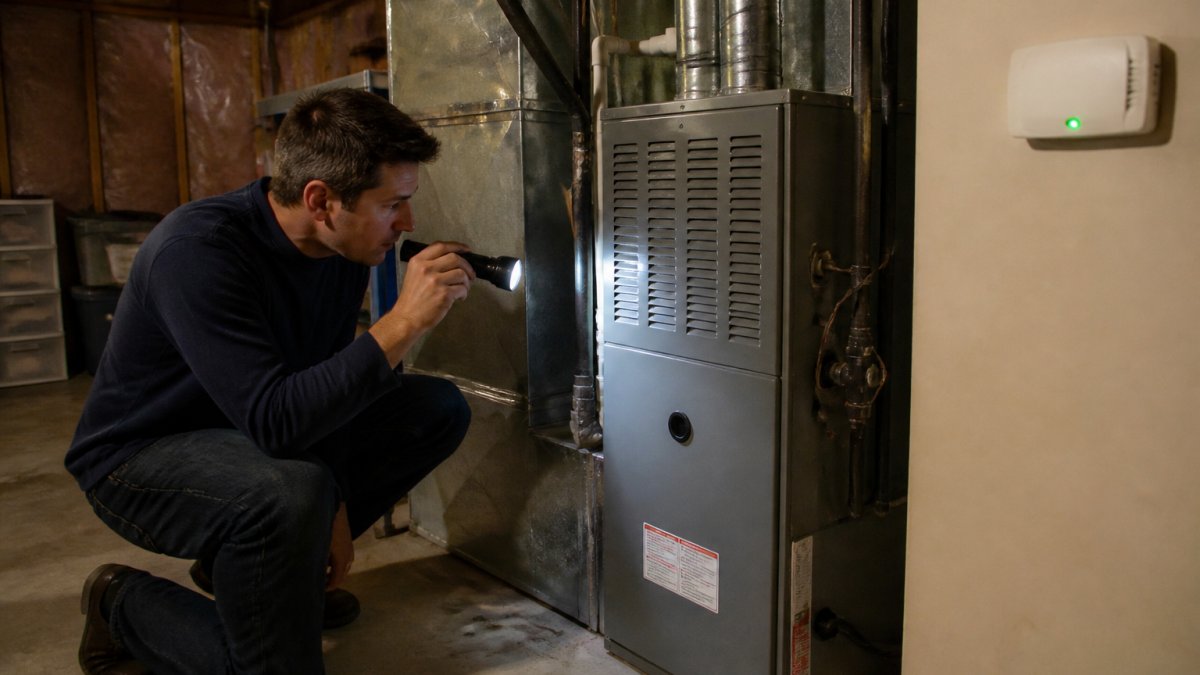
Weak heat is the most common sign we see. A furnace that runs but never quite warms the house is working harder than it should. The cause is often a clogged filter, a failing blower, or ductwork that leaks.
Cold rooms on one side of the house point to poor airflow. Check that your vents are open and not blocked by furniture. If the problem continues, the blower or duct system needs a look. Uneven heating is a symptom, not a quirk.
Unusual Noises, Odors, and Flame Color
Noises and smells tell you the most about a furnace’s health. A banging sound often means expanding ducts or a loose part. A screeching noise can point to a worn blower bearing. Rattling may mean panels are loose.
Odors deserve attention. A musty smell suggests moisture or mold. A rotten-egg or sulfur smell is a possible gas leak, and you should leave the house and call for help right away.
Flame color matters too. A healthy gas flame burns blue. A yellow pilot flame can mean incomplete combustion, which produces carbon monoxide. Make sure your carbon monoxide detectors work. If the flame is yellow, call a pro.
Watch for these eight warning signs, and note that several together usually point to a real problem.
|
Warning sign |
What you notice |
|---|---|
|
Weak or uneven heat |
Some rooms warm, others stay cold |
|
Unusual noises |
Banging, rattling, or screeching during a run cycle |
|
Strange odors |
Sulfur or rotten-egg smell is a red flag |
|
Yellow pilot flame |
Flame should burn blue |
|
Rising energy bills |
Higher costs with no change in heating habits |
|
Frequent cycling |
Furnace turns on and off in short bursts |
|
Water leaks or moisture |
Dripping water or rust near the unit |
|
Excess dust |
More dust in the air points to poor airflow |
Common Furnace Problems and Solutions
Most furnace failures trace back to a short list of causes. Knowing them helps you describe the problem when you call.
- Clogged filter: Blocks airflow and raises bills. Fix: replace it every 1-3 months.
- Failed igniter or pilot: The furnace won’t light. Fix: a technician replaces the part.
- Dirty flame sensor: The furnace shuts off soon after starting. Fix: clean or replace the sensor.
- Blower motor wear: Weak airflow and odd noises. Fix: professional service.
- Thermostat faults: The system doesn’t respond. Fix: check batteries and settings first.
- Cracked heat exchanger: A safety risk. Fix: stop using the furnace and call a pro.
A common mistake is replacing parts at random. Proper diagnosis saves money and gets the heat back faster.
Safe Troubleshooting You Can Do Before Calling
You can rule out a few simple issues yourself. Start with the thermostat. Make sure it is set to heat and the temperature is above the room temp. Then check the circuit breaker and confirm the furnace switch is on.
Next, look at the filter. A dirty filter is one of the easiest fixes. Swap it for a clean one and see if airflow improves. Check that vents are open and not blocked.
Watch out: never open the furnace panel, touch gas lines, or try to relight a pilot you are unsure about. If you smell gas, leave the house first. Safe checks end at the filter, thermostat, and breaker.
When to Call for Emergency Furnace Repair
Some problems can wait for a scheduled visit. Others cannot. The difference is not how inconvenient the problem is, it is whether the situation can hurt someone.
Suspected gas leak. If you smell rotten eggs, sulfur, or a strong gas odor near the furnace, do not flip light switches, unplug anything, or use your phone inside the house.
Carbon monoxide alarm sounds. Carbon monoxide has no smell and no color, so a detector is your only warning.
Yellow or flickering flame with soot or backdraft. A steady blue flame is normal.
No heat in freezing weather. A furnace that quits when outdoor temperatures are below freezing is an emergency for the home, not just for comfort. Pipes can burst within hours.
Repeated breaker trips. A furnace that trips the breaker more than once has an electrical fault. Do not keep resetting it. Leave it off and call a technician.
For same-day help, you can book same-day heating service with our team. If you want a closer look at urgent warning signs, our guide on emergency furnace repair in Kent County walks through what to do step by step.
Furnace Repair vs Replacement: How to Decide
The repair-or-replace call is rarely about a single symptom. It is a comparison of four factors: age, repair frequency, efficiency, and safety. Work through them in order rather than reacting to the loudest warning sign.
1. Age against expected service life. A well-maintained gas furnace commonly lasts 15 to 20 years; some run longer, many do not. If your unit is under 10 years old, a single failed part is almost always worth repairing.
2. Repair frequency and cost. One repair in five years is normal wear. Three repairs in two years is a pattern.
3. Efficiency and operating cost. Older furnaces often run at 60% to 70% annual fuel utilization efficiency (AFUE). Modern standard-efficiency units are around 80% AFUE, and high-efficiency condensing furnaces reach 90% to 98% AFUE.
4. Safety and warranty. A cracked heat exchanger is a stop-use condition, not a repair-or-replace debate, replace the furnace or the heat exchanger, and do not run the system in the meantime.
A simple decision path:
- Under 10 years old, one repair, no safety issue: Repair.
- 10 to 15 years old, repair under half the cost of a new unit: Repair, but start budgeting for replacement.
- 10 to 15 years old, repair near or above half the cost of a new unit: Get two or three written quotes for both repair and replacement before deciding.
- Over 15 years old, repeated repairs, or rising bills: Lean toward replacement.
- Cracked heat exchanger, gas leak, or CO problem: Replace or repair before the system runs again, safety first.
ENERGY STAR notes that age, noise, uneven temperatures, and higher bills are reasons to consider replacing a system, not proof that repair is required. That is the honest way to frame it. If you are weighing both paths, our guide on whether to repair or replace helps you compare costs, age, and efficiency. For a fuller breakdown, read our 2026 HVAC repair versus replacement guide.
Your Seasonal Furnace Maintenance Checklist
A little upkeep each fall prevents most winter breakdowns. Run through this list before the cold sets in.
- Replace the air filter
- Test the thermostat and set a schedule
- Clear vents and returns of dust and blockage
- Check carbon monoxide detectors and swap batteries
- Listen for new noises on a test run
- Book a professional tune-up
The best time to schedule maintenance is early fall, before the first cold snap fills the calendar. Our team explains the ideal timing in this guide on when to schedule furnace maintenance. Skipping tune-ups is one of the most common mistakes we see, and it shortens a system’s life.
What a Professional Furnace Diagnostic Visit Involves
A diagnostic visit is a structured check, not a guess. The technician starts by asking what you have noticed: noises, cold rooms, higher bills. Then they inspect the unit and test how it runs.
Expect these steps:
- Visual inspection of the furnace, vents, and flue
- Filter and airflow check
- Flame and combustion test, including the flame sensor
- Electrical and safety checks, including the heat exchanger
- Thermostat and cycling test
You should leave with a clear answer: what is wrong, what it costs, and whether repair or replacement makes sense. Ask for the findings in plain language. A good technician explains the options and lets you decide.
Schedule Service Before the Cold Sets In
The best time to fix a furnace is before you need it. Small signs you need furnace repair today become no-heat emergencies in January. Waiting rarely saves money. It usually costs more.
At Lake Michigan Heating, Cooling, Plumbing, we send fully insured and certified technicians who explain your options clearly. We base every recommendation on what is best for your home and budget, not on pushing a new system. Our third-generation expert team has served the West Michigan community, and we treat every home like a neighbor’s.
Don’t wait for the first freeze. Get started with Lake Michigan Heating, Cooling, Plumbing and schedule service today for reliable heat all season.
Frequently Asked Questions
How do I know if my furnace problem is an emergency?
Treat it as an emergency if you smell rotten-egg or sulfur odor, which can signal a gas leak, or if you see a yellow pilot flame instead of a blue one. Carbon monoxide detectors going off, pooling water near the unit, or repeated breaker trips also warrant immediate action. In these cases, leave the home if needed and call for emergency furnace service rather than waiting for a routine appointment.
Is it safe to troubleshoot a furnace myself?
You can safely check the thermostat batteries, replace the air filter, confirm the breaker is on, and make sure vents are open. Do not open the burner compartment, attempt to relight a pilot you are unsure about, or ignore a gas smell. If basic checks do not restore heat, stop and schedule furnace repair with a certified technician.
How often should a furnace be serviced?
Schedule professional furnace service once a year, ideally in early fall before the heating season. Annual tune-ups catch worn parts, clean the burners, and confirm safe operation. Between visits, follow a furnace maintenance checklist: change filters every one to three months, keep vents clear, and note any new noises or smells so you can report them.
Should I repair or replace a furnace that keeps breaking down?
Consider furnace replacement when the unit is aging, needs frequent repairs, or your energy bills jump 15 to 20% without a change in usage or weather. A repair makes more sense for a single failed component on a younger system. Ask your technician for a clear repair vs replacement comparison based on your furnace’s age, service history, and condition.
